Ketamine Therapy Clinics professionals serving Phoenix, AZ
Key Takeaways
•Phoenix has 13 listed ketamine therapy professionals with an exceptional average rating of 4.9 out of 5 stars, indicating a mature and quality-conscious local market.
•Kadelyx | Ketamine Therapy in Phoenix leads the market with a perfect 5.0-star rating across 59 reviews, while Phoenix Scottsdale Ketamine Therapy Clinic holds the most social proof with 155 reviews at 5.0 stars.
•IV ketamine infusion costs in Phoenix run $400–$800 per session, with the standard 6-session induction series totaling $2,400–$4,800 — insurance does not cover IV infusions, but Spravato (esketamine nasal spray) may be covered under specific plans through the FDA REMS program.
•Phoenix's extreme summer heat and monsoon season (June–September) can worsen chronic pain and trigger depression flares, making summer one of the highest-demand periods for ketamine therapy alongside the traditional winter seasonal affective disorder peak.
•All 13 listed businesses offer direct phone contact, meaning same-day consultations are achievable — but expect to wait 1–2 weeks for an initial consult and an additional 1–3 weeks before your first treatment session after screening.
Ketamine Therapy For Depression And Chronic Pain in Phoenix: What You Need to Know
Phoenix is one of the fastest-growing metro areas in the United States, with a population of 1.6 million and a healthcare landscape that has rapidly expanded to meet demand. Ketamine therapy has followed that growth curve. The Valley now supports 13 listed ketamine therapy professionals, a number that has risen substantially over the past five years as both the clinical evidence base and patient awareness have matured. That growth has not come at the cost of quality — the local market averages 4.9 out of 5 stars, which is exceptionally high for any medical service category and reflects a competitive environment where providers who deliver poor outcomes do not survive.
Ketamine works differently from conventional antidepressants. Rather than targeting serotonin, it acts on NMDA glutamate receptors, producing rapid antidepressant effects — often within hours to days of the first infusion rather than the four to six weeks typical of SSRIs. For chronic pain, ketamine interrupts central sensitization, the process by which the nervous system becomes abnormally amplified in its pain response. This dual mechanism makes it uniquely relevant to the Phoenix patient population, where chronic pain conditions like fibromyalgia, complex regional pain syndrome (CRPS), and neuropathic pain are common complaints, and where treatment-resistant depression is diagnosed at rates consistent with national averages. Phoenix's extreme desert climate — with summers regularly exceeding 115°F and winter nights dropping into the 30s — creates physiological and psychological stressors that can exacerbate both conditions, giving ketamine therapy a year-round clinical rationale that clinics in milder climates do not face to the same degree.
The Phoenix market offers two primary delivery formats: IV ketamine infusions administered in a supervised clinical setting, and Spravato (esketamine) nasal spray administered in certified healthcare settings under the FDA's Risk Evaluation and Mitigation Strategy (REMS) program. A smaller number of providers also offer intramuscular (IM) ketamine or ketamine-assisted psychotherapy protocols. The most important structural fact for any new patient to understand is that the strongest providers in this market are physician-led operations — either psychiatrist-led for depression-focused practices or anesthesiologist-led for pain-focused protocols — and affiliation with the American Society of Ketamine Physicians, Psychotherapists and Practitioners (ASKP) is the field's primary credentialing signal.
Phoenix-Specific Tip: Because Phoenix sits at roughly 1,100 feet elevation and experiences extreme dry heat, patients are often mildly dehydrated even before arriving for treatment. Most Phoenix-area clinics recommend aggressive hydration — at least 64 oz of water — in the 24 hours before an IV infusion session. Dehydration can complicate IV access, reduce treatment comfort, and in some cases affect how the infusion is tolerated. If you have any labs ordered pre-treatment, ask your clinic about hydration protocols specific to Phoenix's climate.
How Much Does Ketamine Therapy For Depression And Chronic Pain Cost in Phoenix?
Cost is one of the first and most significant barriers patients encounter when exploring ketamine therapy in Phoenix. The honest answer is that ketamine infusion therapy is expensive out-of-pocket for the vast majority of patients, and that is unlikely to change in the near term for IV protocols. The standard treatment course for depression is a six-infusion induction series, typically administered over two to three weeks, followed by maintenance infusions spaced weeks to months apart depending on response. At Phoenix's prevailing rates of $400–$800 per infusion, that induction series represents a total investment of $2,400–$4,800. Chronic pain protocols vary more in structure — some providers use a five-day intensive infusion series at higher doses — and costs can be comparable or higher depending on the clinical protocol.
Spravato (esketamine nasal spray) is the one modality where insurance coverage is a realistic possibility. Because Spravato carries FDA approval for treatment-resistant depression and major depressive disorder with suicidal ideation, it falls under the REMS program which requires patients to receive it in a certified healthcare setting and be monitored for two hours post-administration. When covered by insurance, out-of-pocket costs drop substantially. Without coverage, Spravato sessions run $600–$900 each. Phoenix-area clinics that offer Spravato are typically experienced in navigating prior authorization and can advise on whether your specific plan has a pathway to coverage. It is worth explicitly asking any clinic about their billing team's track record with insurance submissions before committing to a Spravato protocol.
Service
Low Estimate
High Estimate
Notes
IV Ketamine Infusion (Single Session)
Low$400
High$800
Most Phoenix clinics price per session; some offer package discounts for the full 6-session series
IV Ketamine Induction Series (6 Sessions)
Low$2,400
High$4,800
Standard induction protocol for depression; chronic pain series may vary in session count and dosing
Spravato (Esketamine Nasal Spray, per session)
Low$600
High$900
FDA-approved for treatment-resistant depression; only ketamine modality with realistic insurance coverage pathway via REMS program
Maintenance Infusion (Post-Induction)
Low$400
High$800
Frequency varies by patient response — monthly to quarterly; critical for sustaining antidepressant and pain relief outcomes long-term
Money-Saving Tip for Phoenix Patients: Several Phoenix-area ketamine clinics offer bundled pricing for the full 6-session induction series that can save $200–$600 compared to paying per session. Always ask whether the clinic offers a series package before booking individual sessions. Additionally, if your diagnosis includes treatment-resistant depression and you have commercial insurance, ask your clinic whether they offer Spravato as an alternative — it may be partially or fully covered and can achieve similar outcomes for eligible patients. Some clinics in the Phoenix metro also offer financing through CareCredit or Proceed Finance, which can spread the cost of a full induction series into manageable monthly payments.
How to Choose the Right Ketamine Therapy For Depression And Chronic Pain
5 Questions to Ask Before Hiring
Is the clinic physician-led, and what is the supervising physician's specialty? The right answer: The treatment should be supervised by a board-certified psychiatrist (for depression-focused protocols) or a board-certified anesthesiologist (for pain-focused protocols). Clinics where a mid-level provider administers infusions without direct physician oversight carry higher safety and outcome risk. Ask specifically who will be in the room or on-call during your infusion.
Is the clinic affiliated with or does the physician hold membership in ASKP (American Society of Ketamine Physicians, Psychotherapists and Practitioners)? The right answer: ASKP affiliation is the field's primary professional credentialing signal. It indicates the provider engages with current evidence, follows consensus safety guidelines, and participates in the professional community that sets standards for ketamine practice. It is not a guarantee of quality, but its absence is a yellow flag worth probing.
What does the intake and screening process look like, and what conditions disqualify a patient? The right answer: A thorough clinic will require a medical history review, psychiatric history, current medication list, and screening for contraindications including active psychosis, uncontrolled hypertension, active substance use disorder, and certain cardiovascular conditions. If a clinic skips this process or rushes you to treatment without documented screening, that is a significant red flag. Expect 1–2 weeks for a proper intake process.
What integration support do you offer before and after infusions? The right answer: Leading Phoenix clinics offer pre-infusion preparation guidance (set and setting, what to expect, how to approach the experience) and post-infusion integration support, either in-house with a therapist or through a referral network. Ketamine's therapeutic window — the period of heightened neuroplasticity following an infusion — is most effectively utilized when patients have structured support for processing the experience. Clinics that offer only the infusion with no integration component are leaving measurable therapeutic value on the table.
What is your protocol for handling adverse reactions, and what is your emergency escalation plan? The right answer: Every reputable Phoenix clinic should have a clear answer: crash cart or equivalent emergency equipment on-site, direct physician oversight during infusions, and a documented escalation protocol to a nearby hospital if needed. Phoenix's Valley geography means most clinics have access to major hospital systems. If a clinic cannot clearly articulate its emergency protocol, do not proceed.
Red Flags When Hiring Ketamine Therapy For Depression And Chronic Pain
Red Flags to Watch For When Choosing a Phoenix Ketamine Clinic:
No physician on-site during infusions: If the person administering your IV ketamine is not a physician or the supervising physician is not physically present or immediately available during your session, this is a serious safety and quality concern. Ketamine can cause significant cardiovascular and psychological effects that require physician-level clinical judgment to manage.
Pricing significantly below market without explanation: Phoenix IV infusion rates range $400–$800 per session for good reason — the cost reflects physician time, clinical-grade medications, monitoring equipment, and the staffing required to run a safe infusion suite. Clinics pricing sessions at $200–$300 are almost certainly cutting corners on something; find out what before you proceed.
No screening process or immediate availability for treatment: Appropriate ketamine therapy requires psychiatric and medical screening that takes time. Any clinic that can schedule you for your first infusion tomorrow without a prior medical record review, intake call, and screening appointment has not done the clinical due diligence your safety requires.
Guarantees of outcomes or cure language: No responsible ketamine provider will guarantee remission of depression or complete elimination of chronic pain. The clinical literature shows strong response rates — roughly 70% of treatment-resistant depression patients show meaningful response — but outcomes are variable and individual. Marketing language that promises cures or guaranteed results is a professional standards violation.
No integration support or aftercare protocol: A clinic that administers infusions with no preparation guidance, no post-session monitoring, and no integration support or referral is providing an incomplete standard of care. The neuroplasticity window opened by ketamine is most therapeutically productive when supported by structured psychological work. The absence of any integration component is a signal that the clinic is prioritizing throughput over outcomes.
Top-Rated Ketamine Therapy For Depression And Chronic Pain in Phoenix
Phoenix's ketamine therapy market has a genuinely strong top tier. Among the 13 listed providers, five have achieved perfect 5.0-star ratings, which is remarkable in a medical service category where patient experiences are inherently variable and emotionally complex. What distinguishes the top performers is not just their ratings but the volume and consistency of their reviews — a signal that these are not small-sample outliers but clinics with documented, repeatable patient satisfaction.
Kadelyx | Ketamine Therapy in Phoenix stands as the market leader by the most reliable composite measure: a perfect 5.0-star rating backed by 59 reviews. That volume at that rating represents a consistent delivery of outcomes and patient experience over a substantial case load. For patients who prioritize demonstrated track record, Kadelyx represents the strongest signal in the Phoenix market. Phoenix Scottsdale Ketamine Therapy Clinic occupies a unique position as the most-reviewed clinic in the dataset with 155 reviews at a perfect 5.0 stars — this is the deepest evidence base of any local provider, indicating not only quality but significant operational scale and longevity in the market. Infuse Ketamine Lounge has built a 5.0-star reputation across 28 reviews and is notable for its lounge-oriented patient experience model, which emphasizes comfort and environment as components of the therapeutic protocol — a clinically relevant consideration given that set and setting are established factors in ketamine response. Method Ketamine Therapy and Scottsdale Ketamine Clinic round out the perfect-rated group, with 2 and 18 reviews respectively, representing newer or more boutique operations where the sample is smaller but the quality signal is consistent.
When evaluating these providers, patients should use review volume alongside rating. A 5.0 from 155 reviews (Phoenix Scottsdale Ketamine Therapy Clinic) represents substantially stronger statistical confidence than a 5.0 from 2 reviews (Method Ketamine Therapy), even though both earn the same star rating. For patients who are newer to ketamine therapy and want maximum assurance, higher review volume is a meaningful differentiator.
Company
Rating
Reviews
Best For
Kadelyx | Ketamine Therapy in Phoenix
5.0★
59 reviews
Patients seeking a proven track record with strong review volume and a consistent patient experience; ideal for first-time ketamine therapy patients in Phoenix who want high confidence in provider quality
Phoenix Scottsdale Ketamine Therapy Clinic
5.0★
155 reviews
Patients who prioritize the deepest evidence base in the local market; the highest review count of any listed Phoenix clinic at a perfect rating signals operational maturity and consistent outcomes at scale
Infuse Ketamine Lounge | Ketamine Therapy in Phoenix
5.0★
28 reviews
Patients who value environment and comfort as part of the therapeutic experience; lounge-style settings are clinically relevant for optimizing set and setting during ketamine infusions
Scottsdale Ketamine Clinic
5.0★
18 reviews
Patients located in or near Scottsdale seeking a high-rated local option; suitable for those who prefer a more boutique clinical environment with a strong but focused patient base
Method Ketamine Therapy
5.0★
2 reviews
Patients interested in exploring newer entrants to the Phoenix market; review volume is limited so additional due diligence on credentials and protocols is recommended before committing
Seasonal Guide for Phoenix
Phoenix's extreme desert climate creates a seasonal pattern for ketamine therapy demand that differs meaningfully from most other major U.S. cities, and understanding this pattern can help patients plan their treatment timeline more effectively.
Winter (November–February) is the peak season for depression-related ketamine inquiries nationally, driven by Seasonal Affective Disorder (SAD). Phoenix receives more annual sunlight than almost any other major American city — an average of 299 sunny days per year — which blunts but does not eliminate the SAD effect. The shorter days and holiday-period stress still drive a measurable increase in treatment-resistant depression presentations. Patients planning to start ketamine therapy for depression should be aware that scheduling waitlists at Phoenix clinics tend to lengthen in November and December. If you are considering treatment and your depression typically worsens in winter, initiating outreach to clinics in September or October gives you the best chance of completing your induction series before the seasonal low arrives.
Summer (June–September) creates a distinct and often underappreciated demand driver in Phoenix: the combination of extreme heat — regularly exceeding 110–115°F — and monsoon season. For chronic pain patients, the weather dynamics are complex. Barometric pressure changes associated with monsoon storm systems have well-documented associations with increased pain sensitivity in conditions like fibromyalgia, arthritis, and migraines. The psychological burden of extreme heat confinement — Phoenix residents are often effectively unable to spend time outdoors for three to four months — contributes to isolation, depression, and worsening chronic pain through deconditioning and reduced activity. This makes June through August a high-demand period for both depression and chronic pain ketamine protocols in Phoenix, often matching or exceeding winter demand levels. Patients scheduling summer treatment should also account for the practical reality that extreme heat affects transportation options — the drive home after an infusion, during which patients should not be driving themselves under any circumstances, requires a reliable driver who is prepared for summer Phoenix road conditions.
Spring (March–May) and Fall (October–November) represent the most favorable windows for Phoenix ketamine patients from a scheduling and comfort standpoint. Clinic waitlists are typically shorter, outdoor activity and social engagement are more accessible during recovery periods, and the physiological stressors of extreme heat and cold are minimal. Patients who have flexibility in their treatment timing and are not in acute crisis should consider these windows for initiating their induction series.
Monsoon season (typically July–September) carries one additional practical consideration: Phoenix flooding. Flash flooding is a genuine safety hazard in the Valley, and several monsoon storms each year result in road closures and dangerous driving conditions. Patients with scheduled infusion appointments should build flexibility into their treatment calendar during monsoon months and confirm with their clinic whether they have rescheduling policies for weather-related cancellations. This is not a reason to delay necessary treatment, but it is a logistics factor unique to Phoenix that patients in other cities do not face.
Frequently Asked Questions
How do I know if I am a good candidate for ketamine therapy in Phoenix?
The primary indication for ketamine therapy is treatment-resistant depression — meaning you have tried at least two adequate courses of antidepressant medication without sufficient response. For chronic pain, common conditions treated include complex regional pain syndrome (CRPS), fibromyalgia, neuropathic pain, and refractory migraines. Most Phoenix clinics will conduct a screening evaluation to assess your diagnosis, medication history, and medical background. Contraindications include active psychosis, uncontrolled hypertension, active substance use disorder (particularly dissociative drugs), certain cardiovascular conditions, and pregnancy. The screening process typically takes one to two weeks and is your primary pathway to determining candidacy — any reputable Phoenix clinic will not begin treatment without completing it.
Will my insurance cover ketamine therapy in Phoenix?
For IV ketamine infusions, insurance coverage in Phoenix is extremely rare. IV ketamine for depression and chronic pain is considered off-label use (ketamine's FDA approval is as an anesthetic), and commercial insurers almost universally exclude it. The one exception is Spravato (esketamine nasal spray), which holds FDA approval for treatment-resistant depression and major depressive disorder with suicidal ideation. Spravato is administered through the FDA REMS program in certified healthcare settings and can be covered by Medicare, Medicaid, and many commercial plans depending on your specific plan's formulary and prior authorization requirements. If insurance access is a significant factor in your decision, ask Phoenix clinics specifically whether they offer Spravato and whether their billing team has experience navigating prior authorization for your insurance type. Several top-rated Phoenix providers offer both IV ketamine and Spravato, giving patients flexibility based on coverage.
Find Ketamine Therapy Clinics Professionals in Phoenix
Browse top-rated contractors, compare reviews, and get free quotes.
How quickly can I get an appointment at a Phoenix ketamine clinic?
Because all 13 listed ketamine therapy businesses in Phoenix offer direct phone contact, you can initiate the process today. However, the clinical timeline has two distinct stages. First, the initial consultation and screening evaluation: most Phoenix clinics can schedule a consult within one to two weeks of first contact, though this window extends during high-demand periods like the winter holiday season and summer heat months. Second, the time between completing screening and your first treatment appointment is typically one to three additional weeks, as clinics need to review your medical records, confirm your treatment plan, and schedule an infusion suite slot. Total time from first call to first infusion typically runs two to five weeks. If you are in acute psychiatric crisis, communicate this clearly when you call — most Phoenix clinics have protocols for expedited evaluation of urgent cases and can direct you to appropriate crisis resources if needed.
What should I expect during my first ketamine infusion at a Phoenix clinic?
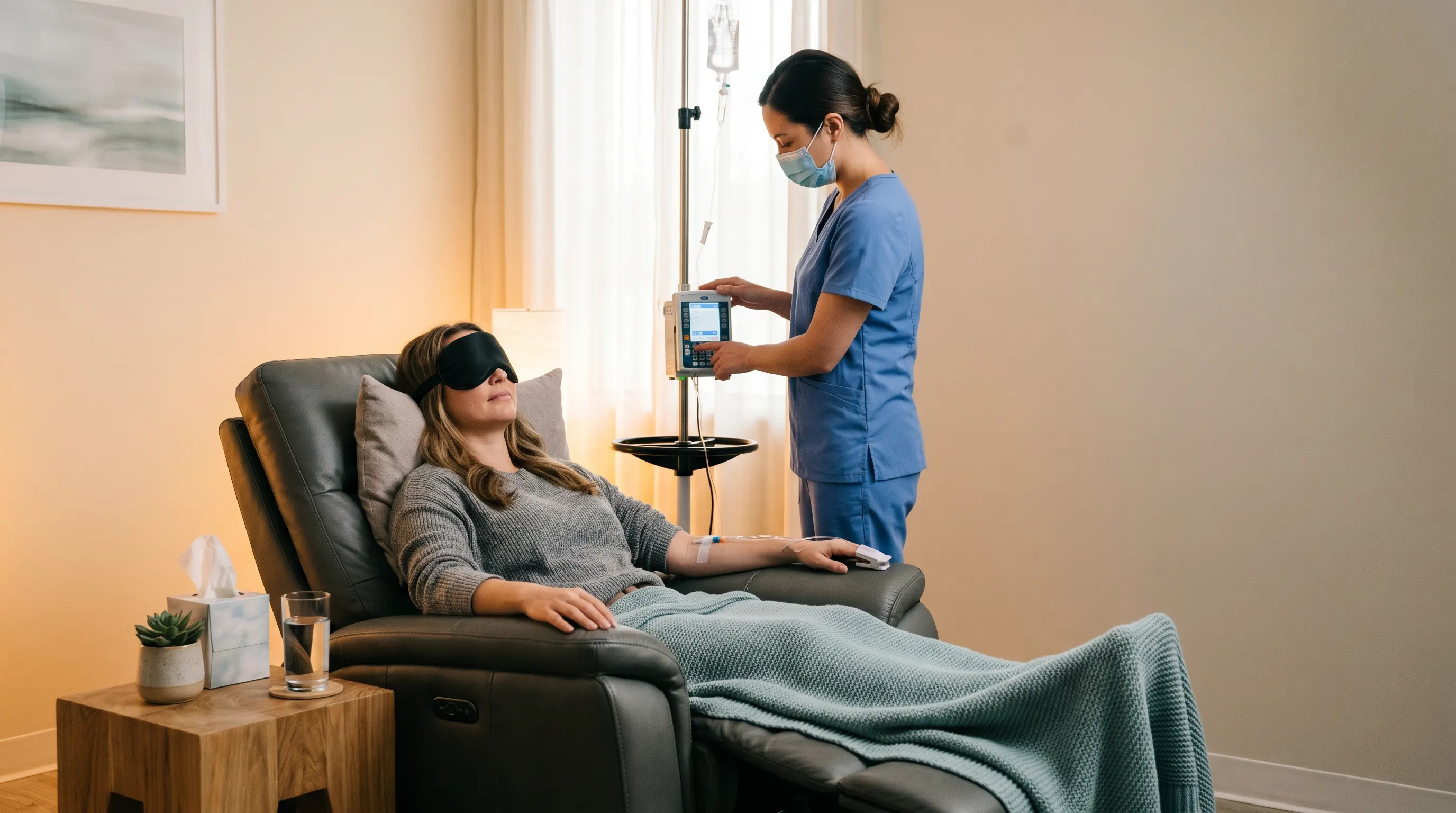
A standard IV ketamine infusion session at a Phoenix clinic typically lasts 40 to 60 minutes for the infusion itself, with an additional 30 to 60 minutes of monitoring and recovery time afterward. You will be seated or reclined in a monitored clinical environment, and your heart rate and blood pressure will be tracked throughout. Ketamine produces dissociative effects — perceptual changes, altered sense of time and space, and in some cases vivid imagery or dream-like experiences — that most patients find manageable and some find profoundly meaningful. Most Phoenix clinics provide eye shades and carefully curated music to support the experience. You will not be able to drive after an infusion and will need a trusted person to take you home — this is non-negotiable and all reputable Phoenix clinics enforce it strictly. Side effects including nausea, dizziness, and disorientation typically resolve within one to two hours post-infusion. Therapeutic effects for depression may begin to appear within 24 to 72 hours after the first or second infusion, though the full induction series of six infusions is required to establish durable response.
How do Phoenix's top-rated clinics compare, and how should I choose between them?
Five Phoenix clinics hold perfect 5.0-star ratings, which means rating alone is not sufficient to differentiate them. The most meaningful differentiators are review volume, clinical specialization, and treatment model. Phoenix Scottsdale Ketamine Therapy Clinic leads on review volume with 155 reviews at 5.0 stars — the largest evidence base in the local market, suggesting operational maturity and consistent outcomes. Kadelyx | Ketamine Therapy in Phoenix combines a perfect rating with 59 reviews, making it the second-strongest signal for documented quality. Infuse Ketamine Lounge offers a distinct lounge-style patient experience that may be particularly relevant for patients who are anxious about the infusion environment. For patients prioritizing location, Scottsdale Ketamine Clinic serves the northeastern Valley. When choosing, visit clinic websites, call directly to assess responsiveness and how thoroughly staff answer clinical questions, and ask specifically about physician credentials, integration support, and emergency protocols. The clinic that is right for you will give clear, direct answers to all five of those questions without hesitation.